 
Home > Glossary
> TOC > Mark
2 > Jesus Heals a Paralytic > Verses
> Mark 2:9a
| 1a 1b | 2a 2b 2c | 3 | 4a 4b 4c | 5a 5b | 6a 6b | 7a 7b | 8a 8b | 9a 9b 9c | 10a - 12d | Mk 2:9a ... "Which is easier-work to-say to-the paralytic, ... "The sins of-you are-forgiven, ...""
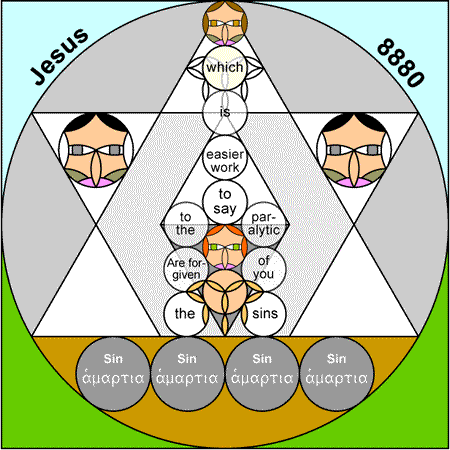
Verse 9 is a flashback to verse 5 revisiting another way of looking at how Jesus cured the paralytic. Jesus asks the scribes what is easier, for him to forgive sins or to have a paralytic perform three impossible physical feats. Verse 9 is a compound question of 4 orders in 5 phrases containing 20 dialog words. The first 2 phrases have these 10 words: ... Ti estin eukopōteron eipein tō paralutikō, Afientai sou ai hamartiai ("Which is easier-work to-say to-the paralytic, "are-forgiven of-you the sins, ..."" The 10 words are top down. This hypothetical diagram shows how these 10 Greek words are like markers laid down to help draw this graph. The word eukopoteron, derived from eu (good) and kopos (to labor, to cut). This word is simply translated in bibles as "easier" (work is understood). The diagram shows the 6 words "Ti estin eukopōteron eipein to paralutiko" (which is easier work to say to the paralytic) are tangent to the "Unclean Spirit holding the child." The 4 words "Afientai sou ai hamartiai" (Are-forgiven of-you the sins) are visually tangent to "his 4 sins" cast to the ground. This command is obviously easier to say than the following three commands he will give to the paralysed child. 2:8b < Verses > 2:9b |
Copyright © 1998-2020 Daniel Gleason, all rights reserved