 
Home > Glossary > TOC > Mk 4 > Parable of the Sower > Verses > Mark 4:5b | 1a 1b 1c 1d | 2a 2b | 3 | 4a 4b | 5a 5b | 6a 6b | 7a 7b 7c | 8a 8b 8c 8d 8e | 9 - 15d | 16a - 20e | Mk 4:5b ... "and immediately it-sprang-up, because the (sprouted seed) not did-it-have a-depth of-soil."
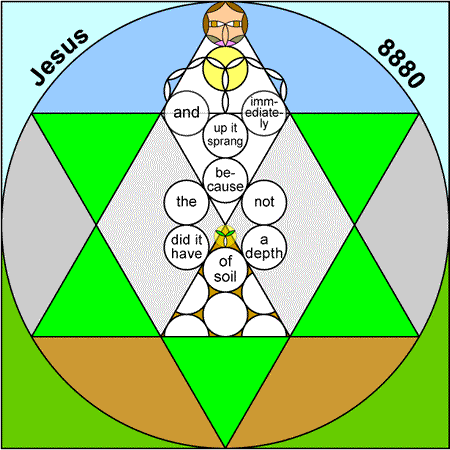
The 3rd and 4th phrases have these 9 dialog words, ... kai euthus eksaneteilen dia to mē echein bathos gēs ("and immediately up-it-sprang, because the (sprouted seed) not did-have a-depth of-soil"). The 9 dialog words are top down. The word "euthus" (immediately) is the cue to use the previous diagram as a template. The diagram shows the three words "kai euthus eksaneteilen" (and immediately it-sprang-up) caused the seed to sprout and its leaves to spring up and its root straight down upon the rock formation. The verb "exaneteilen" comes from "ek" (out from), "ana" (up, completing a process), and "tello" (I make to rise). The 2 words "dia to" (because the) have the understood words (sprouted seed) that gives sense to the phrase. The last 4 words "mē echein bathos gēs" (not having a depth of soil) has an understood gematria image, "to petrōdes" (the rock-like place); a brown triangle filled with 4 rocks. The 2 round rocks answer the depth of soil question. The word "bathos" is a measure of the "depth" between the "sprouted seed" root and the 2 rocks in the "gēs" (soil). The answer is zero. 4:5a < Verses > 4:6a |
Copyright © 1998-2020 Daniel Gleason, all rights reserved