 
Home > Glossary
> TOC > Mk
11 > Jerusalem > Verses
> Mark 11:2b
| 1a 1b 1c | 2a 2b 2c 2d | 3a 3b 3c | 4a 4b | 5 | 6a 6b | 7a 7b 7c | 8a 8b | 9a 9b | 10a 10b - 11d | Mk 11:2b ... "and 'immediately' entering into it, you-will-find a-colt that-is-bound, ..."
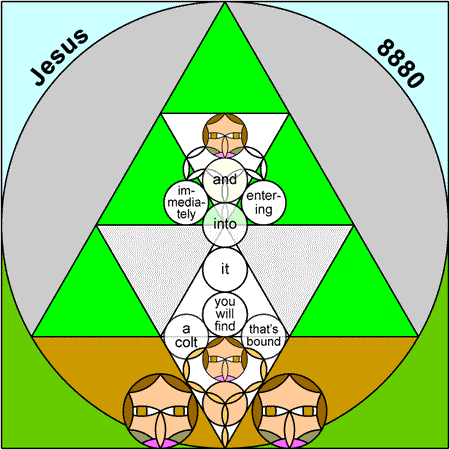
The 4th and 5th phrases have these 8 dialog words, ... "kai euthus eisporeuomenoi eis autēn, eurēsete pōlon dedemenon" ("and 'immediately' entering into it, you-will-find a-colt that-is-bound, ..."). The 8 dialog words are top down. The word euthus (immediately) is the cue to use the previous diagram as a template. The Greek text uses the accusative singular feminine pronoun "autēn" (her, it) to refer to the village (kōmēn - acc, sg, f). The feminine cities named in this OT verse "Rejoice greatly, daughter Zion, shout for joy, daughter Jerusalem!" Zechariah 9:9, agrees with the feminine nouns of Bethphage and Bethany in this NT verse. The noun "polos" (Strongs NT 4454: universally, a young creature, a young horse, the young of various animals) is intentionally ambiguous. It identifies the animal Jesus rides on "the way" into Jerusalem by age and sex but not by species because a polos could be the youth of any animal, even a human youth!! The text only uses the word "Colt" as the creature prophesied in Zech 9:9: "Rejoice greatly, daughter Zion, shout for joy, daughter Jerusalem! Your king comes to you, mounted on a colt, the foal of a donkey." The text in Mark never mentions the donkey, only the "polos" (Colt). Many Bible commenter's however, think it is acceptable to pluck the word "ass or donkey" from an earlier Old Testament book and substitute it for the word polos (Colt) as it appears in the original Greek of Mark. The word "Colt" appears 4 times in Mark 11: verses 11:2, 11:4, 11:5, and 11:7. Mark had four opportunities to say the Colt was the foal of an ass or a donkey but neglected to do so. Luke and John also agree with Mark that the creature was a Colt. Only Matthew 21 says the creature was a donkey. The word "dedemenon" (having been bound) coming from the verb deo (bound, tied, tethered) is also ambiguous. The text does not say to what the animal is bound. The gematria diagram resolves the ambiguity. When the two disciples "underlead" into the "village," the "Colt" is tangent (tethered) to a white equilateral triangle beside the two disciples. The "two daughters" of Zechariah are the two disciples, the "king" will be Jesus, and the "bound Colt" is the transfigured Jesus bound in shining white garments (Mk 9:3); the naked youth who loses his garment (sindona) when Jesus is arrested (Mk 14:51-52); and the youth clothed all around in a white robe who greets Mary Magdelene at the empty tomb (Mk 16:5). In other words, Jesus will enter Jerusalem mounted on his invisible resurrected body (his Colt) which is bound to the Holy Spirit. This interpretation comes from the next phrase of this verse. 11:02a < Verses > 11:02c |
Copyright © 1998-2020 Daniel Gleason, all rights reserved